

ANCIENT FUTURE
"PURE LIME COATINGS": WE BRING A "TWELVE MILLENIA" LEGACY TO CONTEMPORARY ARCHITECTURE.
Anthropologically, the use of Lime acquires a dimension of vital importance in the development of human evolution, with the earliest findings dating back 12,000 years. It was used as an adhesive for attaching arrowheads and spear points in the Sinai Desert. One of the oldest cities with 10.000 years old, Jericho, had pavements and walls coated with lime mortar that still retain their hardness.
It is a marker of sedentary lifestyles and health.
The discovery that heating limestone produces a solid binder allowed human groups to erect sturdy structures and abandon rudimentary, perishable huts.
The construction of temples and places created centers of group identity, from the Mayan to the Mesopotamian cultures - a true form of proto-globalization.
Different work specializations were established: stonemasonry, logging, the mastery of fire for kilns, and finally, the application of stucco.
From a health and hygiene perspective, lime is fundamental. Nixtalization of corn (cooking corn with lime) releases Vitamin B3 and adds calcium to the diet.
The biocidal properties of lime, when used to plaster or coat walls, sterilized spaces, acting as a pest and disease control agent.
In short, lime was the chemical and social link that allowed societies to evolve, grow, and become more complex.
SCIENCE CONFIRM WHAT ANCESTORS KNEW
In 2023, the results of a study by MIT in Massachusetts on concrete in ancient Rome were published. After years of research, they concluded that ancient Roman concrete was self-healing thanks to the incorporation of lime clasts during mixing, which allowed cracks to seal even when exposed to water.
Currently, cement production accounts for 8% of global greenhouse gas emissions. Lime has the intrinsic capacity to absorb atmospheric CO2 without the need for auxiliary treatments or synthetic additives.
Source: https://news.mit.edu/2023/roman-concrete-durability-lime-casts-0106
Mystery solved: Why was Roman concrete so durable?
An unexpected ancient manufacturing strategy could be the key to designing concrete that lasts for millennia.
THE LIME CYCLE
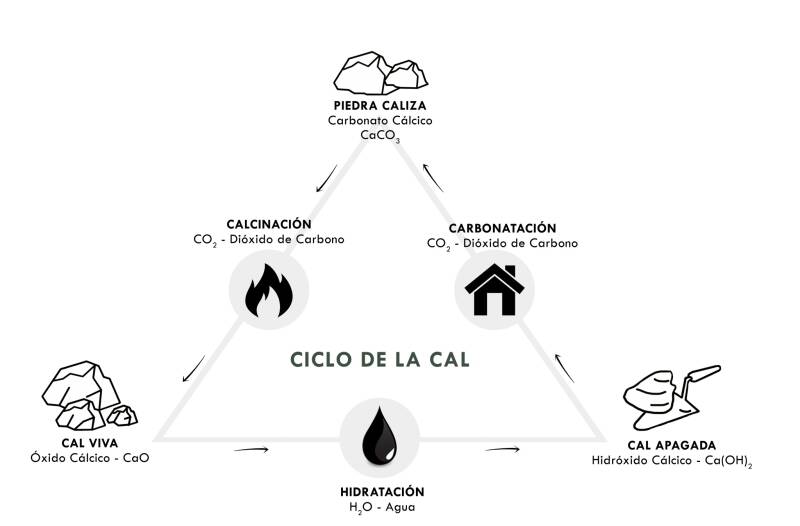
The lime cycle is a natural process that describes the transformation of calcium carbonate (CaCO3), commonly known as lime, into different forms through chemical reactions. This cycle begins with the extraction of lime from natural sources, such as limestone. By heating limestone in a kiln at high temperatures, quicklime (calcium oxide, CaO) is produced through a process called calcination. This reaction releases carbon dioxide (CO2) into the atmosphere. Quicklime is a highly reactive material used in various applications, from construction to agriculture.
Once quicklime is mixed with water, hydrated lime (calcium hydroxide, Ca(OH)2) is produced, a compound used in the production of mortars and in water treatment processes. Over time, hydrated lime can react with carbon dioxide in the air and revert back to calcium carbonate, thus closing the cycle. This process is fundamental to the balance of carbonates in nature and plays an important role in regulating soil and water pH. In short, the lime cycle is not only essential to industry but also has a significant impact on ecosystems and environmental sustainability.
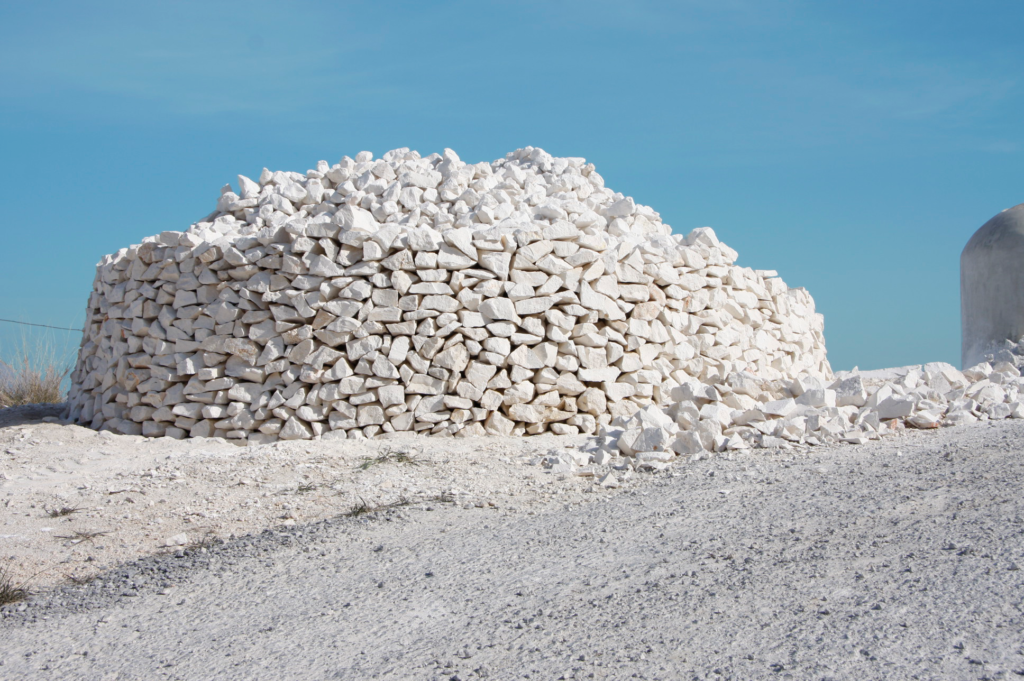
Lime never goes out of style because nature doesn't expire. Speciying lime isn't a decision anchored in the past; it's the most intelligent investment for the future of any architectual work.
Unique Properties: Why Lime is Superior
Continuous Carbonation: Absorbs CO₂ from the environment to harden steadily over time.
Structural Flexibility: Accomodates subtle building movement without cracking or fracturing.
Absolute Breathability: High vapor-permeability allows walls to "breathe," efectivelly eliminating trapped moisture.
Natural Biocide: Its extreme alkalinity naturally prevents the growth of mold, mildew, and bacteria.
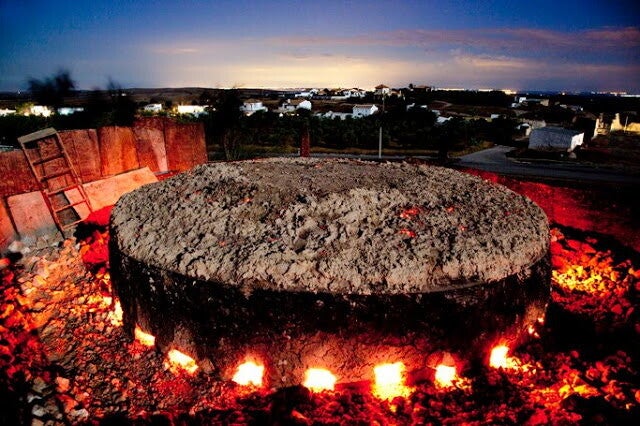
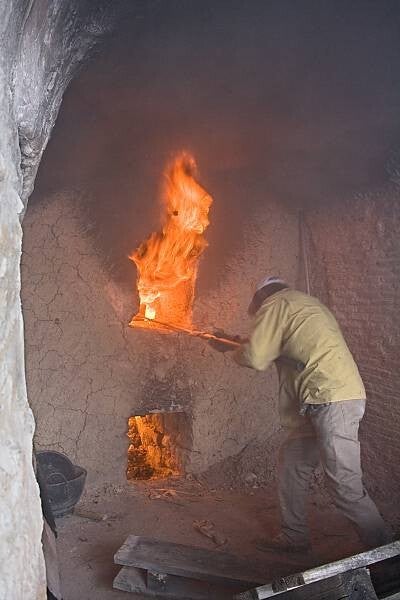
In Andalusia, the last traditional wood-fired kiln in Europe remain in operation,bakingt limestone exactly as ancestral master did.
Applied to High-End Architecture:
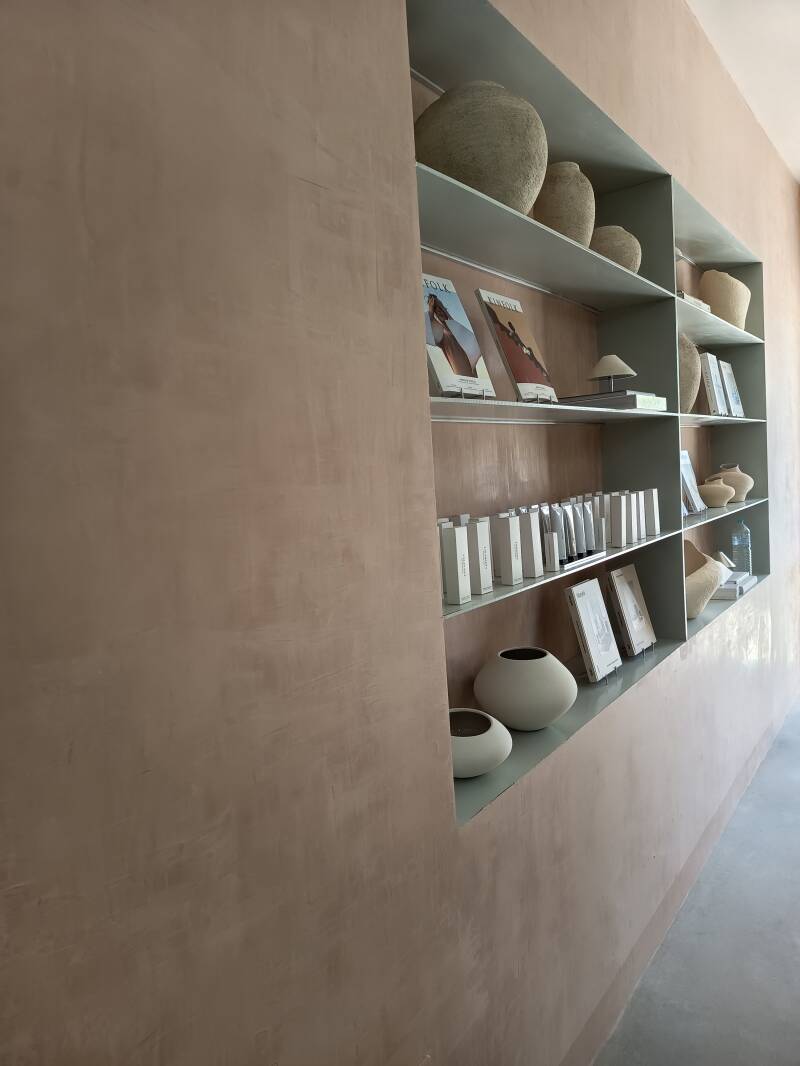
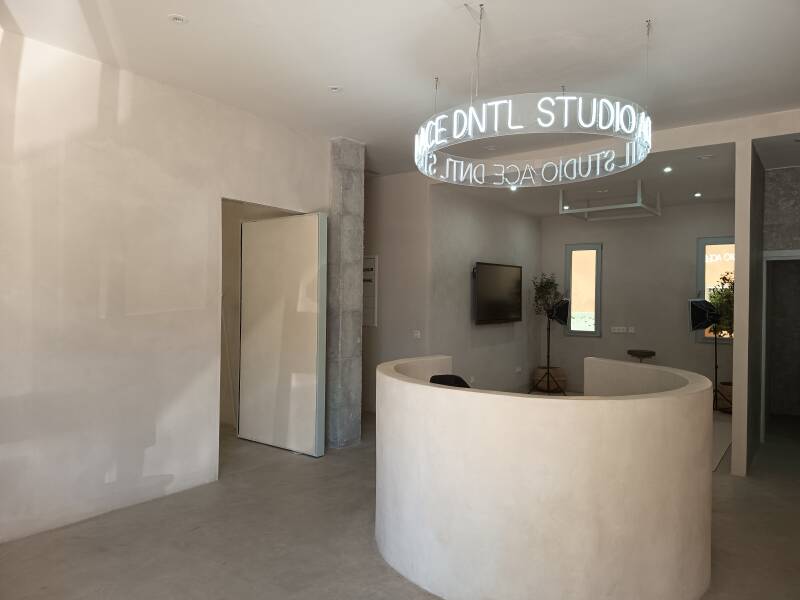
A material that breathes soul into design. Lime, is not merely paint; it is texture, depth, and light. Coating surfaces with lime-based mortars and stuccos endows walls with a living personality that shifts throughout the day. Its mineral essence creates a soft, organic refraction of light, transforming any wall into a sophisticated canvas of subtle movement.
The versatility of this material allows architects and interior designers to break away from the break sterile unifotmity of synthetic coatings, exploring an unlimited universe of tactile and visual expressions.